
St. Clair County Lookup Sources
No county office keeps a master list of every resident. Each St. Clair County record links a name to one limited fact: an assessed parcel, a recorded instrument, a court case, a registration status, a licensed role, or a documented life event. A sound resident lookup keeps those roles separate and records the source date.
| Record | What It Confirms | Where | Access |
|---|---|---|---|
| Property roll | Assessed owner and mailing address for a tax year | DEVNET wEdge | Free online search |
| Court index | A named party and case relationship | Circuit Clerk | Online application, courthouse, copies |
| Voter resource | Status and fields shown by the official tool | County Elections | Online, phone, counter |
| Vital record | A county birth, death, marriage, or civil-union event | County Clerk | Eligibility rules apply |
| License or entity file | A regulated credential or official business role | IDFPR or Illinois SOS | Free public lookup |
Start with the source that matches the question. Property records are useful for an owner, not an occupant. A court hit shows a case role, not its outcome. Vital records document an event, but certified copies have eligibility rules. For an older person, local directories, newspapers, cemetery material, and Illinois Regional Archives Depository indexes may be more useful than a current portal.
Checking St. Clair Court Names
The St. Clair County Circuit Clerk case search covers local criminal and civil matters in Illinois's 20th Judicial Circuit. Its live form is a JavaScript application, so exact controls can change. Search by the name and any known case number, then use filing dates, case type, and disposition shown in the official result to distinguish people.
A name hit is not a judgment. A docket is the chronological list of filings and court events. Charges are not convictions, and a dismissed case is not a finding of liability. Juvenile, sealed, expunged, adoption, mental-health, victim, and other confidential material may be missing or redacted. Current docket data controls when dates change.
- Docket
- The court's dated list of activity in a case.
- Index versus image
- An index describes a filing; an image reproduces the filed document.
- Certified copy
- A copy authenticated by the office that keeps the record.
St. Clair Chancery Name Index
For family history, the IRAD chancery case index is a rare name-level court source. It contains 2,508 St. Clair Circuit Court records from 1815 through 1870. Each entry can show plaintiff, defendant, year heard, box or case number, and case type. The box reference is the bridge to the archival file.
This resident lookup is useful when a person appears in an early property, estate, or family dispute. Record the box and case number exactly, then contact the holding archive about inspection or copies. A library or historical society newspaper index may help identify the likely case first. The old index does not stand in for the modern Circuit Clerk search.
Verify St. Clair Resident Records
Same-name collisions are common. A middle initial, spouse, business, estate, or trust can change how a person is indexed. Before accepting a match, anchor the name to a place and time, preserve the record number, and compare an independent source.
- Write down the full name, variants, likely community, approximate year, and any known address.
- Choose the least sensitive official source that fits the known fact, such as DEVNET for a parcel or the Circuit Clerk for a case.
- Save the source, access date, record number, and the person's exact relationship to that record.
- Confirm the match with a second source, such as an assessor owner paired with a deed party or a court party paired with a case file.
- Check jurisdiction and date before stating a conclusion. East St. Louis election records, federal cases, and out-of-county events follow different routes.
A null result means only that the name was not found in the source searched on that date. It can reflect a variant spelling, another county, restricted access, incomplete historical coverage, or a record outside the portal's scope.
Confirming St. Clair Vital Events
The St. Clair County Clerk Vital Records office keeps county births from 1874, deaths from 1878, and marriages performed in the county from 1763. A county record belongs where the event occurred, not where the person later lived. Marriage and civil-union records can connect names and dates, but neither proves a current address.
Requests may be made in person, by mail with the county form, or through the county's approved online vendor. The Clerk does not take direct online credit-card orders. Mail requests use a money order or cashier's check, and identification or proof of authority may be required. Birth copies are limited to the person, a parent, or legal representative under the stated rules; death requests may require family or legal authority.
The form asks for the record type and event-specific facts. Birth requests include the individual's name, parents' names, birth date, copies, and payment. Death requests use name and date of death. Marriage and civil-union requests identify both parties and the event date. Illinois Department of Public Health is the fallback for statewide or out-of-county events.
St. Clair Voter Status Checks
The county voter resources provide routes to check registration, apply to vote by mail, find a polling place, and identify elected officials. County election operations exclude East St. Louis, which has its own election authority. When the online vendor frame fails, contact County Elections by phone or visit the counter.
A voter result is not proof of present physical occupancy. Illinois limits voter-data access and purpose, redacts sensitive fields, and does not provide a public mass-contact directory. The statewide file is reserved for registered political committees and bona fide political purposes. A missing result can reflect a move, name change, different election authority, maintenance status, or a protected address.
Resident Lookup Through Public Roles
Professional and business records can confirm a public role without proving residence. The Illinois Department of Financial and Professional Regulation license lookup shows regulated credentials and status fields that vary by board. Compare the displayed license number, profession, and status with the person sought.
The successful capture below shows the official IDFPR starting point for a St. Clair County resident lookup.
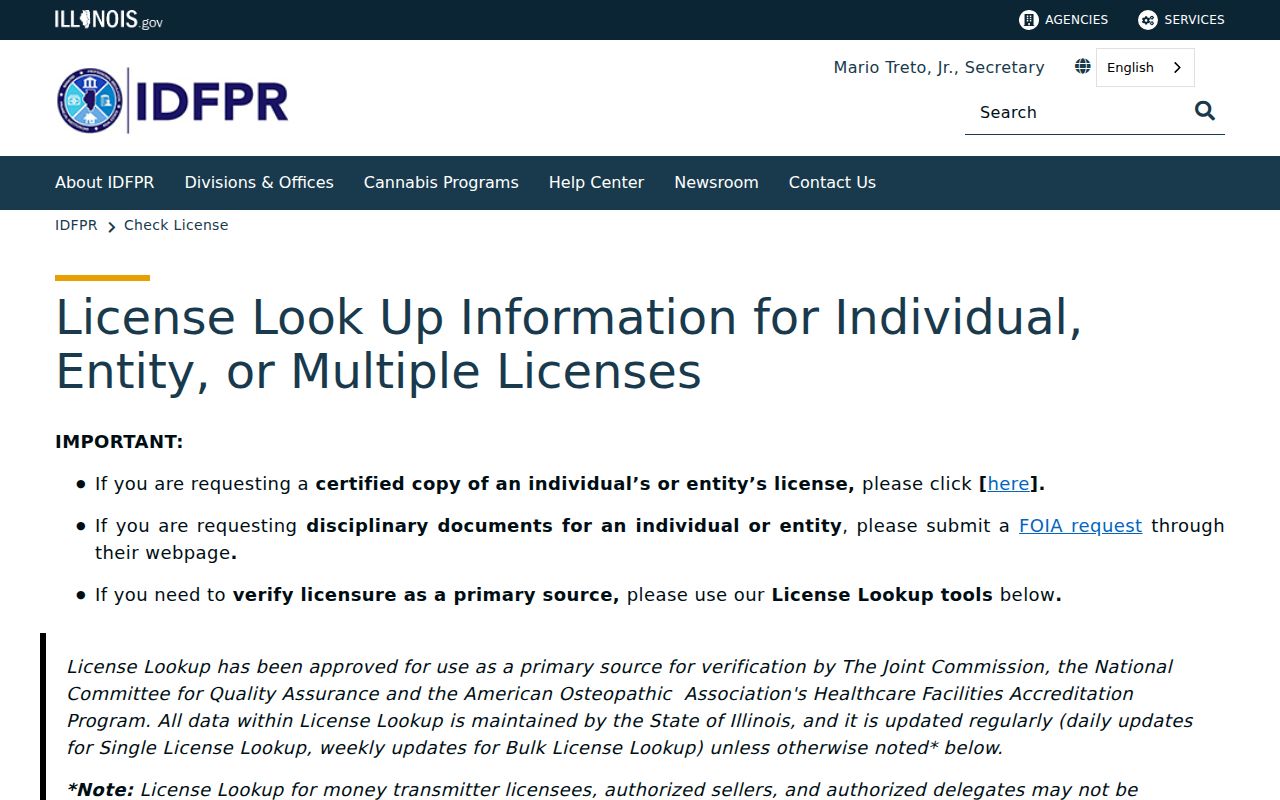
The state result describes a license relationship, not a home address or property interest.
The Illinois Secretary of State entity search can likewise identify an officer, manager, or registered agent. Notary records use the Illinois notary search. Its captured landing page provides another exact-role check.
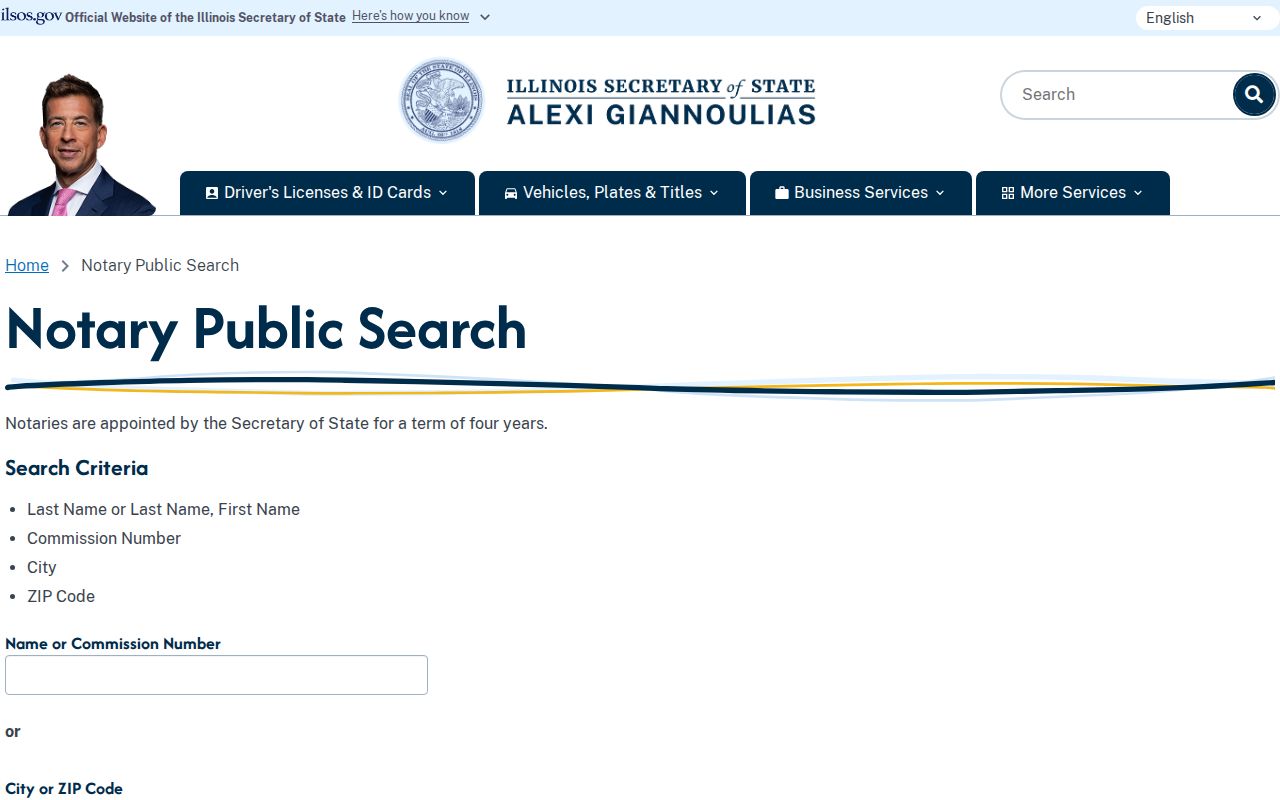
A registered office or agent address may be professional rather than residential, so label it as shown.
Separate St. Clair Custody Systems
Custody sources have different scopes. The county Sheriff roster is an hourly snapshot and may require human verification. Illinois Department of Corrections covers state custody and parole, while the Federal Bureau of Prisons covers federal custody. The federal inmate locator should be used only when federal custody is relevant.
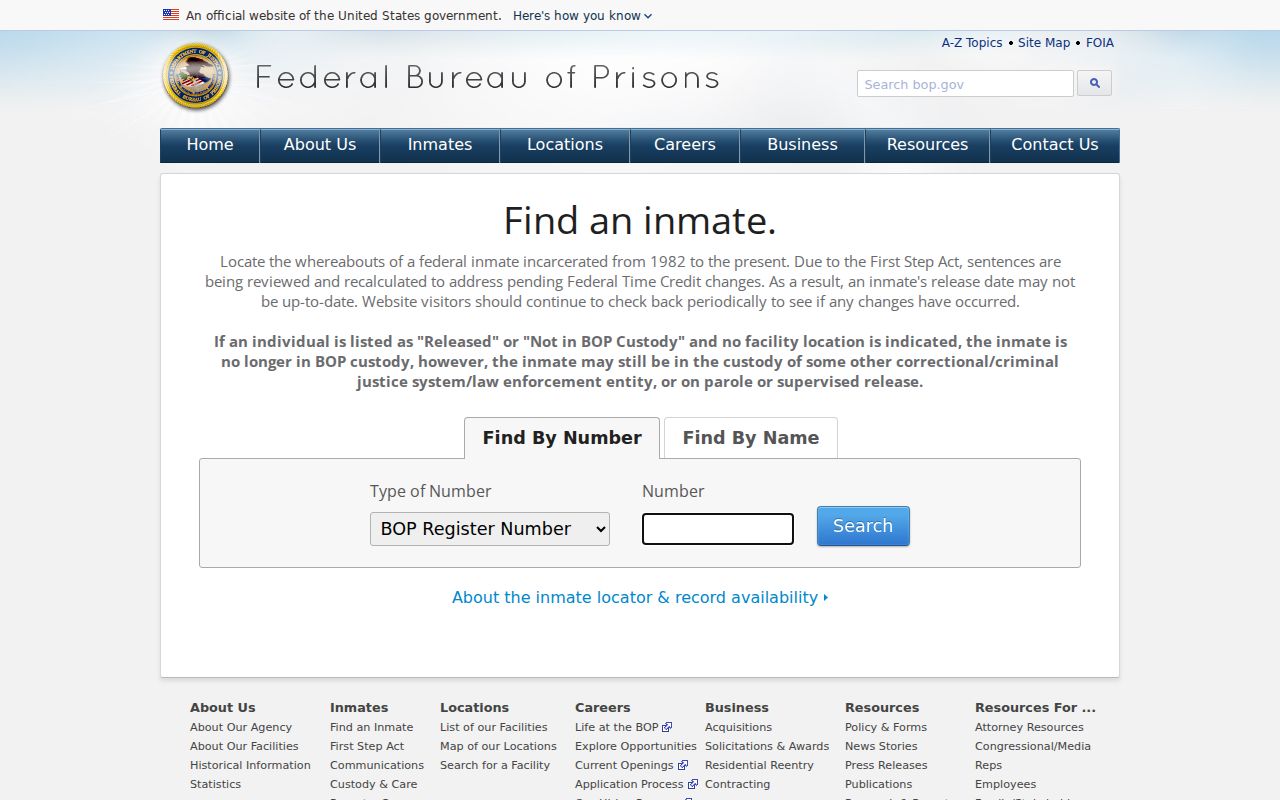
The image reinforces the scope distinction: a local no-result says nothing about state or federal records.
The Illinois State Police statutory registry is another separate system with its own warning and exact-match needs.
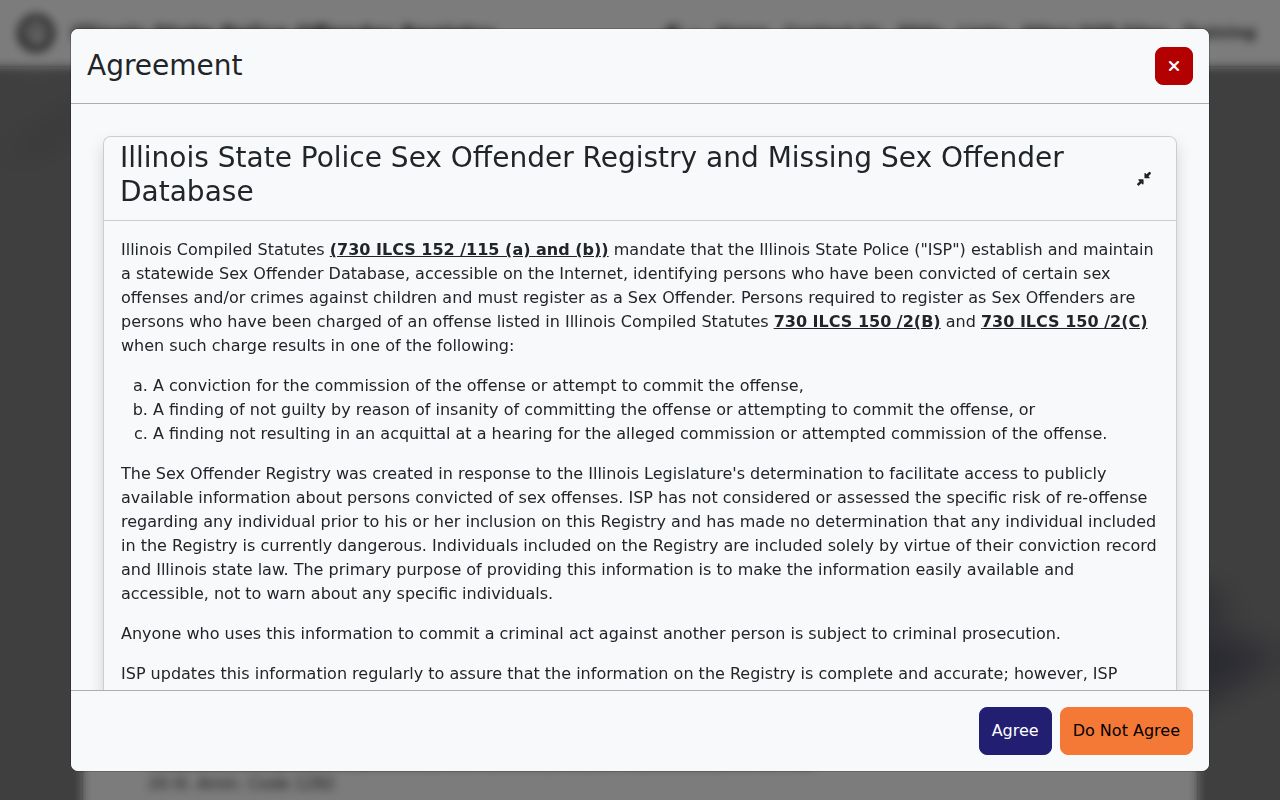
Use registry data only within the official site's terms, confirm identifiers, and do not treat it as a general resident roll.
When St. Clair Searches Fail
Online access is only one channel. Circuit Clerk staff can help locate a case by number and document name at #10 Public Square in Belleville. Historical court files may require IRAD, an archive, or a library index. County vital records accept form-based mail and counter requests. Election questions can go to the county office by phone. Existing county administrative records may be requested under the Illinois Freedom of Information Act, but FOIA cannot override court confidentiality, Election Code limits, or vital-record eligibility.
Ask for a defined existing record, date range, and office. Broad requests for every record about a private person are less useful and can cross protected categories. Preserve any gap rather than filling it with an inference.
St. Clair Resident Lookup Limits
Illinois protects certain addresses and record types. The Address Confidentiality Program can provide a substitute address for qualifying survivors and household members. Voter data can be redacted, certified vital copies require eligibility, court files can be sealed, and driver information is restricted. Corrections belong with the office that created the record.
A careful resident lookup reports the source, date, and relationship without publishing full birth dates, parent names, medical details, protected addresses, or sensitive record combinations. It never turns an owner name, business role, or case party into a claim of current residence.
Lawful use. Use St. Clair County records for lawful personal research. Never use a resident lookup to stalk, harass, intimidate, or harm anyone.